Speakers

Sébastien Lecommandoux received his Ph.D. (1996) in Physical Chemistry from the University of Bordeaux. After a postdoctoral experience at the University of Illinois (UIUC, USA) in the group of Prof. Samuel I. Stupp, he started his academic career at the Laboratoire de Chimie des Polymères Organiques as Associate Professor in 1998 and was promoted to Full Professor at Bordeaux INP in 2005. He was Director of the Laboratoire de Chimie des Polymères Organiques (LCPO-CNRS) from 2016 to 2025, and is currently leading the group “Polymers Self-Assembly and Life Sciences”.
His research focuses on the rational design of bio-inspired polymer systems for advanced biomaterials and pharmaceutical applications, leveraging the self-assembly of polypeptide-based block copolymers to engineer functional polymersomes for targeted drug delivery. Beyond delivery platforms, his work develops biomimetic strategies to construct synthetic viruses and artificial cells, aiming to bridge molecular engineering with complex biological functionality for next-generation biomedical technologies. He published over 250 publications in international journal, 6 book chapters and 15 patents (3 being licenced, 1 start-up created Doxanano). He is also co-director of the joint laboratory LCPO-L’OREAL.
Sébastien Lecommandoux is recipient of the CNRS Silver Medal (2025) after getting the CNRS Bronze Medal (2004), Institut Universitaire de France Senior Chair (IUF 2025, Junior in 2007), Fellow of the Royal Society of Chemistry RSC (2017), Elected member and Fellow of the European Academy of Science (EurASc 2026), Elected member of the Academia Europaea (2020), French Academy of Science Chemistry Seqens Award (2019), XingDa Lectureship Award from Peking University (2021). He also recently holded the Chaire annuelle Innovation technologique Liliane Bettencourt, Collège de France (2024-2025). He is Editor-in-Chief of Biomacromolecules (ACS) since 2020 after serving as Associate Editor since 2013. He is also in the Editorial Advisory Board of several international journals, including Bioconjugate Chemistry (ACS), Polymer Chemistry (RSC), Biomaterials Science (RSC) and RSC Applied Polymers.
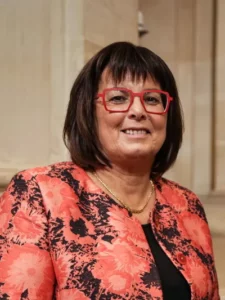
Sylvie Begin
Institut of Chemistry and Process for Energy, Environment and Health (ICPEES)
Sylvie Begin-Colin completed her PhD degree in Material Chemistry at University of Nancy (France) in 1992. She has integrated in 1992 the CNRS as Researcher at the Laboratory of Science and Engineering of Material and of Metallurgy at the Mining Engineering School of Nancy and has developed researchs on physico-chemical modifications induced by ball-milling in oxides. Then, she was appointed Professor in 2003 at the European Engineering School in Chemistry, Materials and Polymers (ECPM) at the University of Strasbourg and was director of ECPM (450 students and 45 Professors/Assistant-Professors) from 2014 to 2021.
Her research at ICPEES focuses on the chemical engineering of hybrid nanomaterials for environment and health and she heads the « NAMATHY » team. One great part of her research aims at developing different chemical and mechanochemical synthesis methods and at understanding the synthesis mechanisms of hybrid nanomaterials to control their size, shape and/or composition. Iron oxide-based nano-objects are thus designed to combine imaging and therapeutic modalities in one formulation for health applications. Hybrid perovskites and iron oxide nanostructures are also been combined with carbon nanotubes and graphene to develop new materials for energy and pollution control applications.
She has thus contributed to the creation of one start-up for cancer treatment and is consulting for other biomedical start-ups. She has obtained AOARD, ANR, INCA, Labex, MICA, ARC, INTERREG, Alsace contre le Cancer grants and has participated and participates as partner to different European programs ((Euronanomed, Marie Curie…). Her work has been rewarded by the “Jean-Rist” price of the French Society for Metallurgy and Materials and by the Seqens Price of Academie des Sciences and award of “Chevalier dans l’ordre des palmes académiques”.
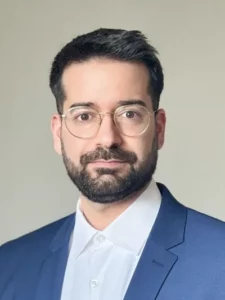
Dr. Alexandros Sofias
Principal Investigator
Head of the “Immune Cell Targeting and Imaging” Lab
Institute for Experimental Molecular Imaging (ExMI)
RWTH Aachen University Hospital
52074, Aachen, Germany.
Dr. Alexandros Sofias is the head of the “Immune Cell Targeting and Imaging” laboratory at the Institute for Experimental Molecular Imaging (ExMI), RWTH Aachen University Hospital, Aachen, Germany. His research focuses on unraveling the intricate in vivo fate of cancer nanomedicine using multimodal and multiscale imaging techniques, and developing nanoimmunotherapeutics for targeting and manipulating the cancer-associated immune system, inside and outside the tumor microenvironment. His research is funded by the prestigious Junior Principal Investigator Fellowship from the Excellence Initiative of the German Research Foundation (DFG), as well as research grants from the German Cancer Aid (Krebshilfe), the Clinical Research Unit (CRU) program of the German Research Foundation (DFG, CRU 344), the START Program (Faculty of Medicine, RWTH), and the EuroBioimaging. In addition, he serves as Director of Scientific Program and Abstract Strategy, and member of the Annual Meeting Program Committee (AMPC) for the Controlled Release Society (CRS), as well as Associate Editor for RSC Pharmaceutics.
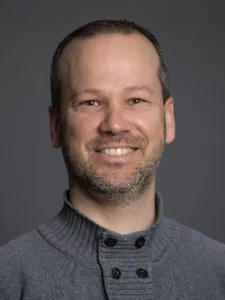
Davy Guillarme
Ph.D. in analytical chemistry
Davy Guillarme, Ph.D. in analytical chemistry from the University of Lyon, France, currently serves as an associate professor at the University of Geneva in Switzerland. With over 370 published journal articles in pharmaceutical analysis and h-index of 85 (Google Scholar), his expertise spans various techniques, including HPLC, UHPLC, HILIC, LC−MS, SFC, SFC-MS, multidimensional LC, and the analysis of biopharmaceuticals.
He is an editor of the Journal of Chromatography A and serves on the editorial advisory board of prestigious journals like Trends in Analytical Chemistry, Journal of Chromatography B, Journal of Separation Science, LC−GC International…
Davy Guillarme has been honored with the LC-GC Emerging Leader Award in Chromatography (2013), the Jubilee Medal from the Chromatographic Society (2018), the International Award of the Belgian Society of Pharmaceutical Sciences (2022) and the Csaba Horvath memorial award (2025). He has also been listed among the world’s most influential analytical scientists by « Analytical Scientist » magazine in multiple years.
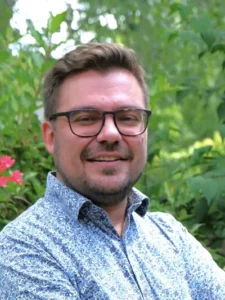
Remi Rosière
PharmD, PhD, ULB
Université libre de Bruxelles
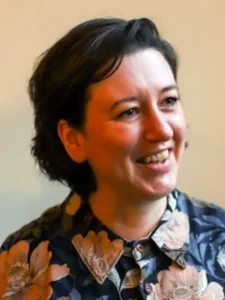
Ine Lentacker
PhD in Pharmaceutical Sciences
Ine Lentacker obtained her PhD in Pharmaceutical Sciences from Ghent University in 2009, following her training as a pharmacist. She is currently a Full Professor at Ghent University and Principal Investigator of the ‘Vaccine Delivery Group’ within the Laboratory of General Biochemistry and Physical Pharmacy (www.drugdelivery.be). Her research focuses on the design, characterization, and clinical translation of innovative mRNA-based vaccines and immunotherapies. She serves as cocoordinator of the European Horizon 2020 project Baxerna2.0, which advances the development of bacterial mRNA vaccines. In parallel, she leads a CEPI-funded project aimed at elucidating the impact of freezedrying on mRNA vaccine stability and performance using stateoftheart analytical methodologies. Her work has contributed to the establishment of the Nanomedicine Center (www.nanomedicinecentre.com), which fosters collaboration with the GMP facility at UZ Gent for the production of mRNA vaccines for phase I clinical studies, including the patented mRNA Galsome platform developed within her team. Recently, she was awarded an ERC Consolidator Grant (MyNANO) to investigate fundamental interactions between mRNA therapeutics and the innate immune system, with the goal of designing a new generation of immunotherapies for solid tumors.
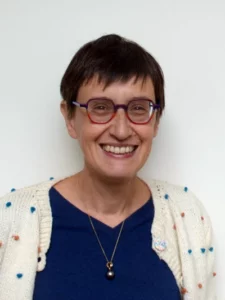
Florence Gazeau
PhD in Physics
Florence Gazeau, PhD in Physics (Université Paris Diderot, 1997) is a Senior Scientist (DRCE1) at CNRS. She is the director of NABI (Nanomedicine, Extracellular Biology, Integration, and Innovations for Health), a research lab launched in 2025 by Université Paris Cité, CNRS, and INSERM to advance translational research and innovation in nanomedicine and subcellular biotherapies.
NABI hosts IVETh (https://iveth.u-paris.fr), the first national integrator dedicated to bioproduction and biotherapy, focusing on the production, characterization, and engineering of extracellular vesicles and nanovectors for diagnostics and personalized therapies.
Florence Gazeau is also involved in the EVerZom spin-off, which specializes in the industrial-scale bioproduction of therapeutic extracellular vesicles using a proprietary turbulence-based technology. She is also co-founder of Exosiris spin-off, focusing on EV-LNP hybrids for cell therapy in vivo.
Recognized for her pioneering work in nanomagnetism and nanotechnology applied to medicine and in the life cycle of nanoparticles in the body, she has authored more than 210 publications. She was awarded the CNRS Silver Medal in 2024 and was elected to the French Academy of Sciences the same year.
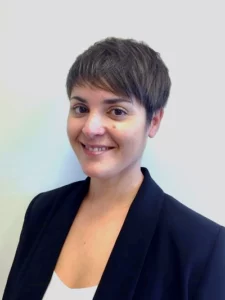
Ana Beloqui
Associate Professor and Research Associate from the Belgian Fund for Scientific Research
Dr. Ana Beloqui is an Associate Professor and Research Associate from the Belgian Fund for Scientific Research (F.R.S.-FNRS) at the Université catholique de Louvain (UCLouvain, Brussels, Belgium), and group leader in the Advanced Drug Delivery and Biomaterials lab at the Louvain Drug Research Institute. Dr Beloqui’s main research interests are the investigation of the oral drug delivery route (especially focused on the oral delivery of biologics) and the interaction of the drug delivery system with the gastrointestinal epithelium.
She has received multiple scholarships and prizes, including the Galien Prize 2021 in Belgium, the Endocrinology, Diabetes and Metabolism Prize 2023 from the Belgian National Funds of Research, the Rising Woman in Science award from the Controlled Release Society in 2024, and the prestigious ERC starting and proof of concept grants from the European Research Council.
She also serves as Associate Editor for the Journal of Controlled Release.

Alexander Kros
Full Professor and group leader of SBC, Leiden Institute of Chemistry, Leiden University
Prof. Kros is interested in curiosity-driven and fundamental molecular-level insight into drug-delivery related transport phenomena. One of nanomedicine’s enduring challenges is delivery, which may be overcome by elucidating (in vivo) transport phenomena at the molecular level.
He has published over 200 peer-reviewed articles in high impact journals like Advanced Materials, Advanced Science, Cell, Nature Communications, Nature Chemistry, Journal of the American Chemical Society, Angewandte Chemie, Journal of Controlled Release.
Prof. Kros’ work has been supported through prestigious grants such as the ERC synergy grant to develop novel approaches to treat glioblastoma and several other grants including EU Horizon MSCA Cofund “EVOLVE”, and the NWO Gravitation Programme “iCNS” funding the new institute of Chemical NeuroScience. Over the past decade, he has led the development of synthetic fusogenic peptides and LNPs for drug delivery, enhancing tissue and organ uptake. He pioneers the use of zebrafish as an in vivo high-/medium-throughput pre-screening tool for nanomedicines. Kros also developed an effective method to determine the true hard protein corona on lipid-based.
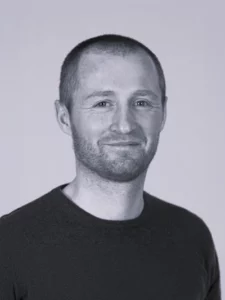
Davide Brambilla
Professor of Drug Delivery at the University of Geneva, Switzerland
Biosketch :
Davide Brambilla is Professor of Drug Delivery at the University of Geneva, Switzerland. He completed his Ph.D. in Pharmaceutical Technologies and Biopharmacy at the School of Pharmacy, University of Paris-Sud, focusing on the design of nanoparticles for drug delivery applications. In 2012, he joined ETH Zurich, where, after three years as a postdoctoral researcher, was promoted to Group Leader. In 2017, he was appointed Assistant Professor at the Université de Montréal, promoted to Associate Professor in 2022, and in 2026, became Professor at the University of Geneva. His laboratory focuses on the design of nanoparticles for drug delivery applications and microneedles for diagnostic purposes. In 2023, he received the New Investigator Research Award from the Association of Faculties of Pharmacy of Canada. He has co-authored over 90 publications in leading peer-reviewed journals (Science Advances, Nature Sensors, Advanced Materials, Small, Biomaterials, Journal of Controlled Release), filed two patents, and co-founded a start-up company. He is a past president of the Canadian Chapter of the Controlled Release Society and serves as an Associate Editor of the Journal of Controlled Release.

Sara Martinez de Lizarrondo
PhD in Biochemistry